


Fluctum: Open-Source Dynamic Pricing Solution for Stores Selling Spot-Priced Goods


If you sell gold, silver, or anything else priced off a live market, you've probably already run into this problem: the price you show a customer and the actual market price start drifting apart the moment you set it. Update prices too rarely and you're either giving away margin or overcharging people - and both cost you customers eventually, just in different ways.
Most store owners assume there are only two options: pay developers to build a custom pricing system, or keep manually updating prices and accept the risk. There's a third option that's easy to miss - using an existing, already-built open-source solution instead of starting from scratch.
This post lays out what each path actually costs, in plain terms, so you can decide which one makes sense for your store.
Where This Problem Shows Up
Precious metals dealers feel this first, because gold and silver prices move constantly and the margins are thin enough that a stale price matters. But the same problem shows up anywhere a product's fair price is tied to a live index rather than something you set once and leave alone:
- Precious and industrial metals - bullion, plus copper, platinum, and palladium for wholesale operations.
- B2B catalogs synced to an ERP - pricing that has to reflect what your internal systems say right now, not what a database field said last week.
- Currency-sensitive goods - high-value items where the price also has to move with exchange rates, not just the underlying market.
The same logic extends further, too - anything priced off a live sale index rather than a fixed catalog value (think collectible trading cards or limited-run goods pegged to recent resale prices) runs into the same drift problem, even if the tooling for those categories is less mature today.
The Real Cost of Building This Yourself
"Just show a live price" sounds simple, but a live-pricing checkout has to get several things right at once, and getting any one of them wrong costs real money:
- Pulling a live price feed reliably, including handling the moments the feed is slow or unavailable.
- Updating the price a customer sees in real time, without expensive full-page reloads.
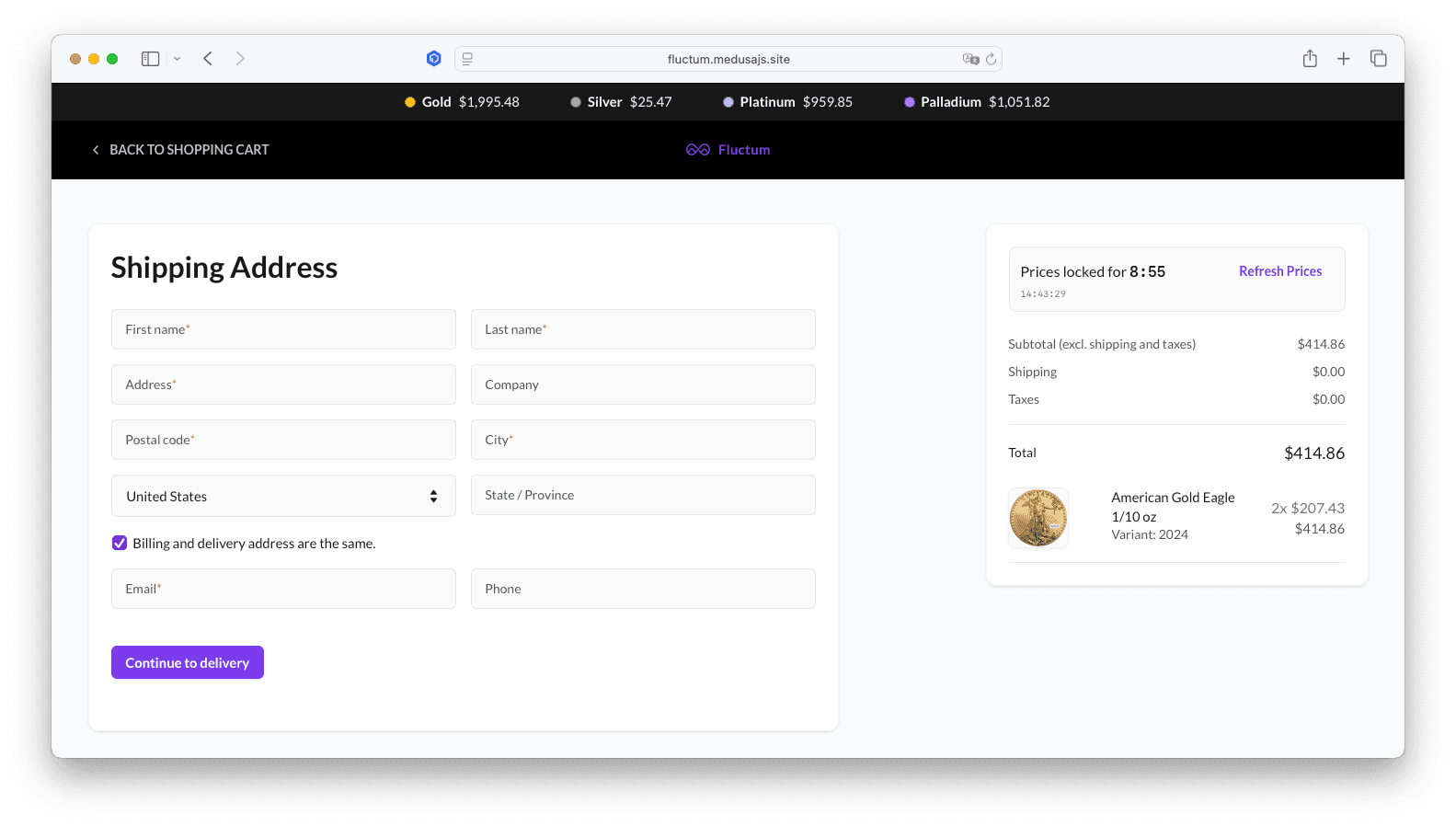
- Freezing the price at the right moment during checkout - if the price can still move after the customer clicks "buy," you're back to the original problem.
- Refusing to complete an order if the frozen price has gone stale - otherwise a customer could complete a purchase minutes after the quoted price expired.
None of these are exotic, but each one is a place a custom build can quietly get wrong, and the mistakes are the expensive kind: a wrong price that either loses margin on every sale or drives away customers who feel overcharged. This is why a live-pricing checkout is realistically a multi-week engineering project, not a quick add-on - even though the end result looks simple to a shopper.
What a Ready-Made Solution Looks Like
Fluctum is a free, open-source plugin built on top of Medusa, an open-source e-commerce platform. Because it's a Medusa plugin rather than a separate system, it drops into an existing Medusa store and keeps everything else Medusa already gives you - multi-region and multi-currency support, promotions, customer accounts, taxes, shipping, and payments - while adding live pricing on top. It's installed by a developer once, and after that it runs on its own.
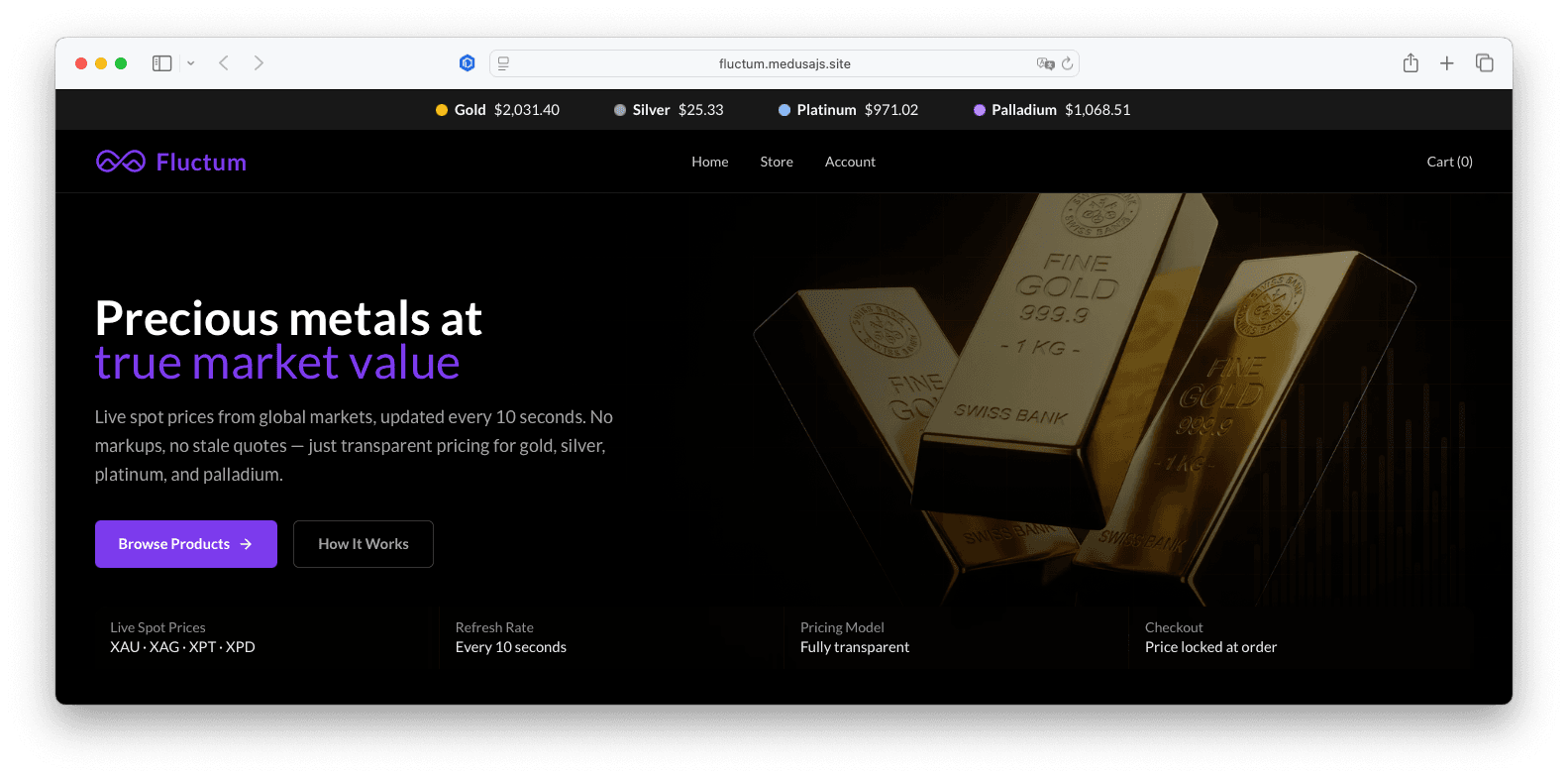
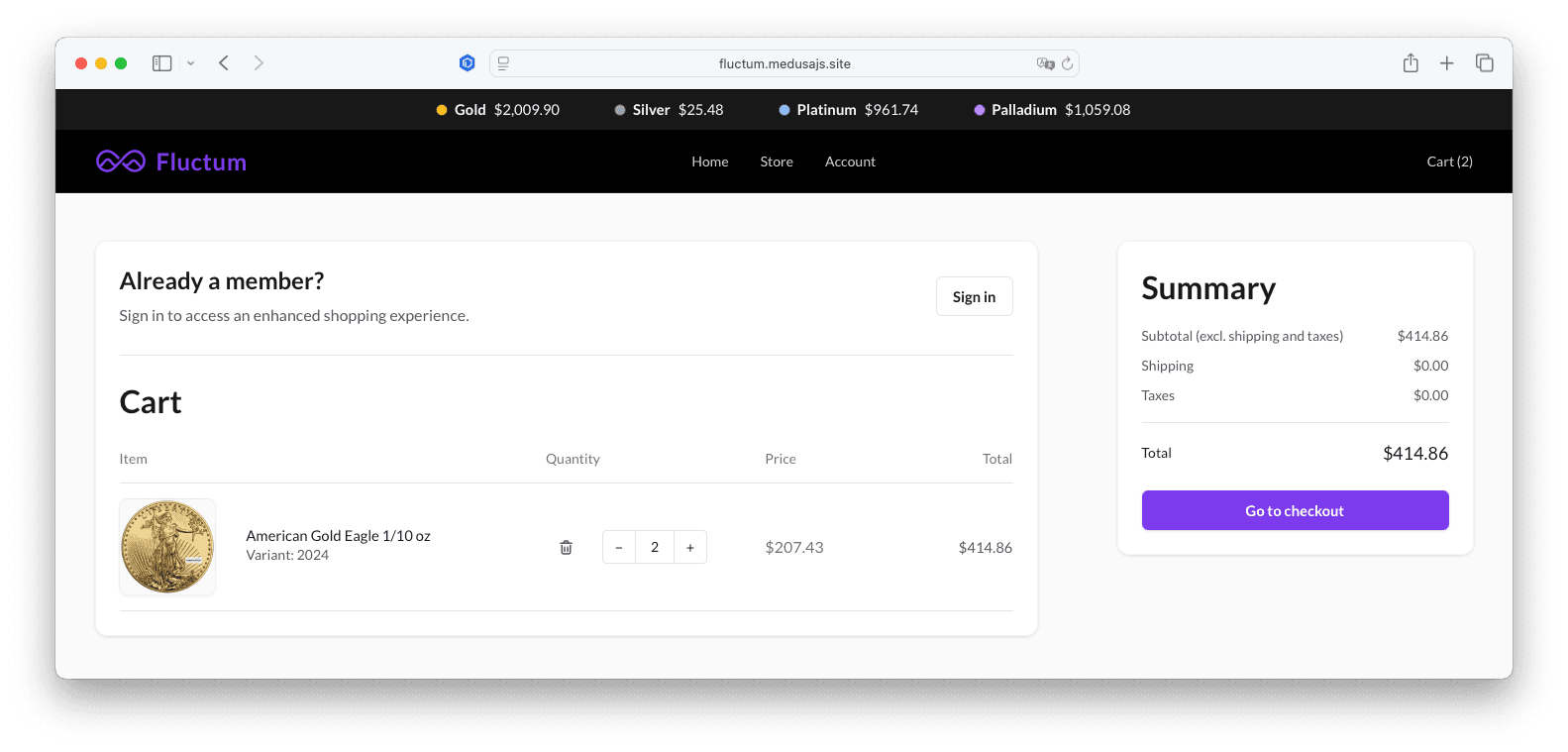
You can try the live demo yourself at fluctum.medusajs.site - add a product to the cart, watch the price update, and go through checkout to see the price lock in place.
Which one should you choose?
If you already have engineering resources and want a pricing system that's deeply custom to your business (unusual pricing rules, an existing in-house platform you can't move off of), building it yourself is a legitimate option - just budget for the ongoing maintenance, not only the initial build.
For most stores, especially ones already running or considering Medusa, starting from a free, working solution and customizing it only where needed is the faster and lower-risk path. Because Fluctum is open-source and built on Medusa, you own the resulting codebase outright rather than licensing access to someone else's product - the same store can be extended to sync with an ERP system, connect to warehouse or inventory systems, switch or add payment providers like Stripe or PayPal, or bolt on whatever custom business logic your store needs later. You're never locked into someone else's roadmap if your store eventually needs something different.
Quick Reference
| Build it yourself | Use Fluctum (free, open-source) | |
|---|---|---|
| Time to launch | Months of developer time, plus testing | Installed and configured in hours by a developer |
| Ongoing maintenance | Your team owns it - feed outages, checkout bugs, every future fix | Maintained upstream; you install updates when you want them |
| Upfront cost | Developer time (custom-built, one-off) | Free - MIT-licensed, no license fee |
| Risk of a checkout pricing mistake | You design and test the "lock the price at checkout" logic yourself | Already built to handle the common failure modes (expired prices, stale quotes at payment time) |
| Customization | Full control, by definition | Open-source and built on Medusa - you own the code, so you can extend it to ERP, storage/inventory, payments, or custom logic as your store needs |
Conclusion
Static prices and live markets don't mix, but that doesn't mean the fix has to be an expensive custom build. Fluctum gives Medusa stores selling precious metals - or any other spot-priced goods - a free, working starting point, with the option to extend it later if your business needs something more specific.
Discuss custom integrations
Talk to u11d about ERP, inventory, or payment integrations to extend dynamic pricing for your specific business needs.


Frequently Asked Questions
Customers complete checkout at a gold or silver price that's already gone stale — how do I stop that?
Install a dynamic-pricing plugin that locks the quoted price at the start of checkout and refuses to complete the order if that lock expires before payment, ensuring the paid price matches a current market quote.
I only update prices manually a few times a day — what's the fix?
Use an automated dynamic-pricing solution that pulls a live spot-price feed on a schedule and pushes updated prices to the storefront so listings never sit stale for hours.
I don't have an in-house engineering team — can I still offer live, moving prices?
Yes. A developer installs and configures a plugin like Fluctum once; after that it runs automatically without daily engineering work.
My spot-price feed went down — will the store show wrong prices or break checkout?
No. The store can continue showing the last known price until the feed returns, and a well-built plugin avoids breaking checkout during temporary outages.
Is Fluctum really free?
Yes — Fluctum is open-source under the MIT license and has no license fee to install or use.
Can I add Fluctum to a Medusa store I already run?
Yes. Fluctum is implemented as a Medusa plugin and is designed to be added to an existing Medusa store without moving platforms.
Can I customize Fluctum later if my business needs change?
Yes. Because Fluctum is open-source you or any developer can extend it — for example to sync pricing with an ERP, add payment providers, or add custom business logic.


